


Lucky preview number 13 takes me down to the Port.
2025 ladder position: 13th (9 wins, 14 losses)
2025 best-and-fairest: Zak Butters
Senior coach: Josh Carr
Story of the season
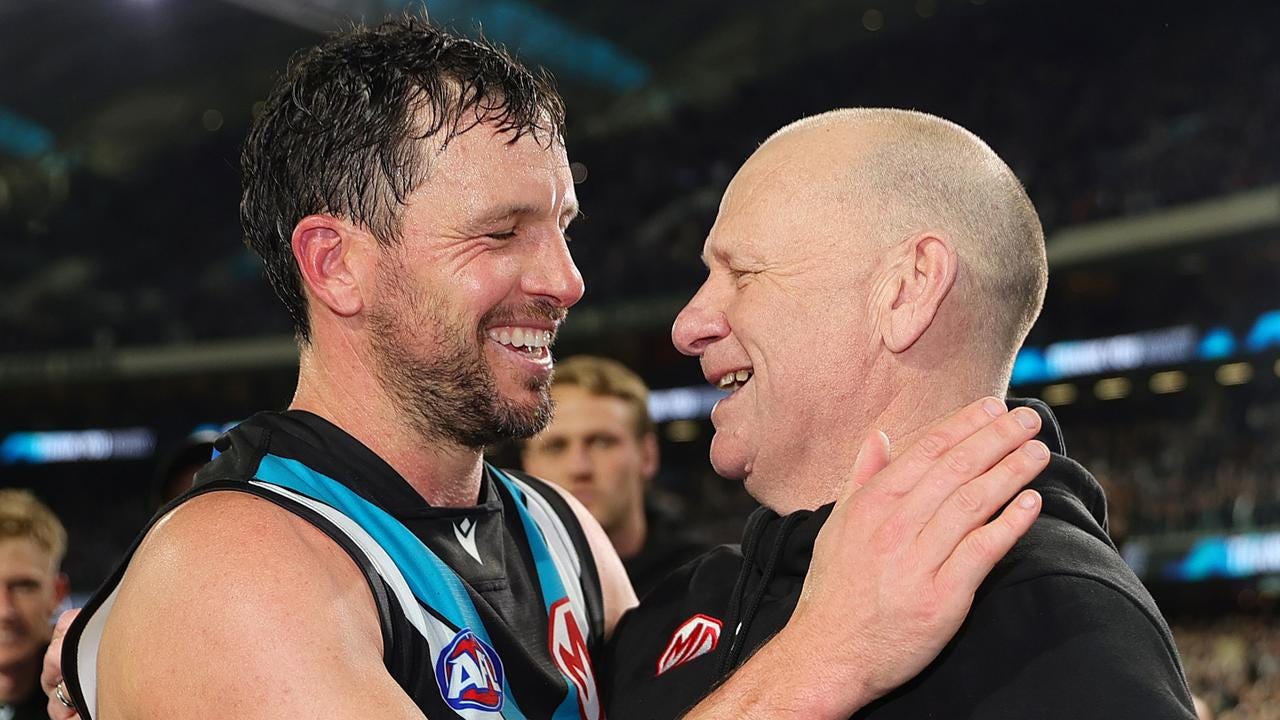
On February 12th, 2025, Port Adelaide announced that Ken Hinkley would coach in 2025 before handing over the job to Josh Carr at the conclusion of the season. That answered the biggest question swirling around the club but generated an only slightly smaller one in its place: would Carr be the de facto Senior Coach? Both he and Hinkley strenuously denied, insisting that Ken remained in charge. That this claim wasn’t accepted by everyone pointed to the difficulty of managing a planned coaching transition.
Some of the optimism generated by the news that the Hinkley Era now had a definitive end was destroyed by a brutal first-up defeat to Collingwood at the MCG, a performance which showcased this side’s persistent problems against strong opposition under its long-time coach. An easy dismissal of Richmond in a game where new recruit Jack Lukosius broke his kneecap was followed by limp defeats to Essendon and St Kilda which proved that Port’s revamped game plan was experiencing teething problems (I promise this is not a joke about Port fans). It established the basic pattern which came to define 2025: Port was competitive against mediocre sides and exposed against good ones. That’s because, for many reasons, Port was a mediocre side in 2025. An unlikely home win against Gold Coast in Ken Hinkley and club legend Travis Boak’s last game was a nice coda to what was otherwise a wasted, shapeless season. The knowledge that beating Gold Coast ultimately meant the Crows played (and lost to) Collingwood instead of the Suns in their Qualifying Final might have warmed some hearts down at Alberton.
Summary of game style
For much of the Hinkley era, Port were one of the competition’s most kick-dominant, territory-driven sides. Aggressive ball movement was underpinned by marking dominance. At its best, that game plan overwhelmed opponents who couldn’t handle Port’s speed and midfield power. But Port’s coaches also knew it was inherently fragile. When space narrowed and pressure intensified – as it tends to in September – Port often struggled to stabilise and absorb momentum. If they couldn’t access the corridor, they struggled to generate quality looks. The results could be brutal.
So, ahead of the 2025 season, whoever the Senior Coach actually was recalibrated the method. Kicks fell sharply as a share of disposals. Handball receives and handball metres gained rose dramatically. Port’s profile shifted from “win it and kick it” to something more connective, built around layered possession chains and coordinated support. The idea was to build something more modern, and more resilient, that was both less predictable and more tolerant of the intense pressure of finals footy.
Captain Connor Rozee’s redeployment to half-back (partly a response to Dan Houston’s defection to Collingwood) was a key part of that shift. Rather than being another piece in the midfield rotation, he became the player tasked with initiating back-half possession chains: organising exits, stepping through the first layer of pressure, and using his vision to see up the field. It looked like an unusual move for a club captain midfielder in his prime. Structurally, it made sense.
Some things worked. Port became much more comfortable moving the ball by hand and exit sequences became cleaner. There was less predictability. The problem was the foundational layer couldn’t hold. Port went from being one of the competition’s best clearance sides to one of the worst. The side’s ability to win contests around the ground declined. Once the initial defensive press was breached, opponents still cut through too easily. The intent was clear: move beyond a glass-cannon identity towards a more resilient structure. But the foundations of control that might have enabled it to work fell away.
Given that Carr was almost certainly one of the architects of the new game plan, a wholesale reversal of the new approach in 2026 seems unlikely. The more plausible path is consolidation: improving stoppage integrity, tightening defensive spacing, and strengthening forward-half retention. It won’t always be pretty, and it certainly won’t be easy – but the foundations of Port Adelaide’s new tactical identity have been laid.
List changes
In:
Jack Watkins (Rookie Draft)
Will Brodie (trade – Fremantle)
Corey Durdin (trade – Carlton)
Jacob Wehr (free agent – Greater Western Sydney)
Balyn O’Brien (Supplementary Selection Period)
Mitch Zadow (Supplementary Selection Period)
Out:
Dylan Williams (delisted)
Ryan Burton (delisted)
Lachlan Charleson (delisted)
Jeremy Finlayson (delisted)
Hugh Jackson (delisted)
Jed McEntee (delisted)
Travis Boak (retired)
Willie Rioli Jr. (retired)
Rory Atkins (retired)
List profile
Number of top-10 draft picks: five (T-10th)
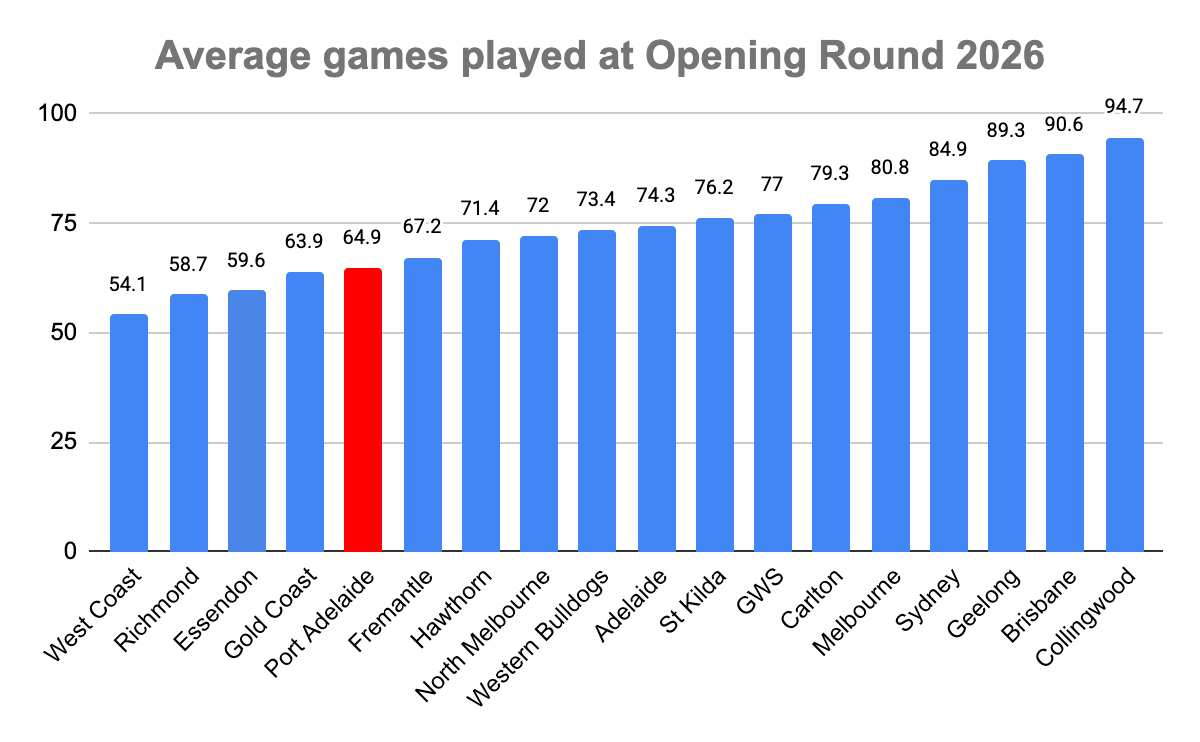
Average age at Opening Round: 24.6 (9th)
Average number of games played: 64.9 (14th)
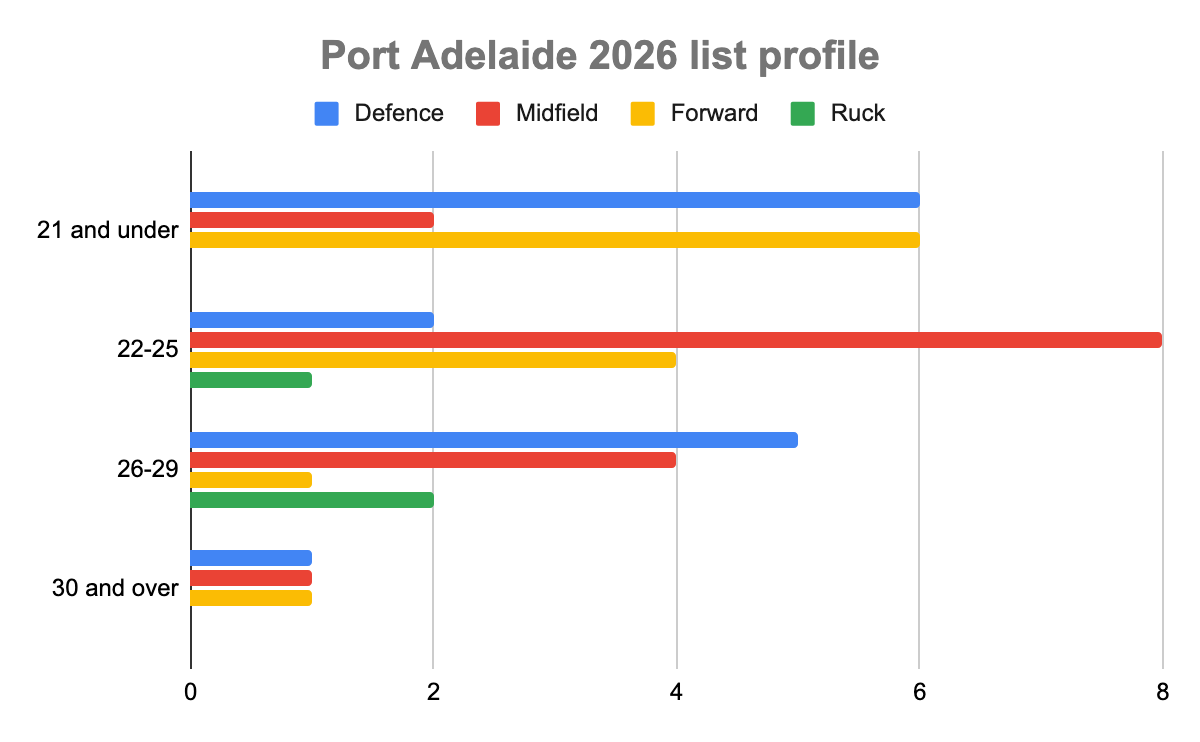
No club has a list profile quite like Port Adelaide. There are a handful of bright-burning stars in or near their peak age: Butters, Horne-Francis, Bergman, Rozee, Georgiades. There are about the same number of competent second-tier contributors: Aliir, Wines, Drew, Lukosius, Powell-Pepper. And then there is a long tail of patchwork players: mature-age imports, rookies, and speculative late picks – the dubious harvest of years spent overlooking the National Draft. Port’s list isn’t hourglass-shaped or J-shaped. It’s mushroom-shaped. Talent is concentrated in a small number of players rather than distributed evenly across the list. That’s true of every list: talent follows a power law distribution in footy as it does in other occupations. But the extreme profile of Port’s list helps explain why, in recent years, Hinkley’s side has been both irresistible against poor sides and easy for the best to stop. The club’s recent off-season moves gesture towards a more even spread – Will Brodie, Corey Durdin, and Jacob Wehr will probably all play games in 2026 – but none materially move the needle.
All three lines are brittle, but the backline has the least upside. It’s not without strengths: Aliir Aliir remains a clever interceptor, and Esava Ratugolea has moved beyond meme status to become a dependable match-up on opposition key forwards. But it gets thin rather quickly. Brandon Zerk-Thatcher is often overmatched by bigger and smarter opponents. Lachie Jones has the physical tools of an AFL player, but not always the decision-making. Rozee’s move back has offset some of the damage caused by Houston’s departure, yet Port still looks short a genuine high-end distributor. A lockdown small capable of neutralising elite opponents is also conspicuously absent. Miles Bergman can fill that role, but it is not the best use of his talent. The result is a backline that functions well when the game is on Port’s terms, but struggles to repel repeat entries.
Whenever I contemplate writing an article about how footy’s taxonomy for different types of midfielders should progress beyond “guns” and “bulls” to terms that actually do descriptive work (like in soccer), my mind drifts to Port’s midfield. The talent is concentrated in attacking midfielders. Butters, Horne-Francis and Rozee, before he became an attacking half-back, are all more like 10s than 8s or 6s. They’re creators, not controllers. As a result, a large amount of the responsibility falls on the shoulders of Willem Drew. At times, it resembles the original incarnation of Real Madrid’s “Galácticos” when they met their match; lots of flair, not much defensive running. Butters is the superstar: incisive in traffic and relentlessly creative. Although a very different type of player, Horne-Francis is too good not to reach a similar level one day. His slight stagnation in 2025 was more plausibly the product of injury and tactical adjustment than anything more serious. The most intriguing midfield variable in 2026 is Miles Bergman. Used extensively at centre bounces in a small number of games last season, his blend of athleticism and discipline makes him a logical candidate for a more permanent role. Ollie Wines provides hard-ball ballast. Jase Burgoyne has established himself as a reliable winger, though his slight frame might cap his on-ball potential. The opposite flank remains unsettled, likely shared between Jackson Mead, Jacob Wehr, Christian Moraes, and rotating midfielders. Dante Visentini looks like he’ll start the season as Port’s first-choice ruck.
The forward line is mercurial. Mitch Georgiades is an unconventional spearhead who prefers to lead into space rather than crash packs, though Charlie Dixon’s retirement did see his contested work improve last season. His ability to create separation and generate shots is near league-best. Jack Lukosius’ first season in teal was largely lost to injury, but the theoretical fit is sound: Lukosius connecting the ground vertically, Georgiades operating closer to goal. Whether the pairing can generate enough contests and defensive pressure remains uncertain. With Todd Marshall likely to spend more time in defence in a Westhoff-type role, opportunities may open for Jack Whitlock or Ollie Lord. At ground level, the small forwards are mostly blue-collar types: Darcy Byrne-Jones, Joe Richards, Sam Powell-Pepper (returning from a second ACL). The exception, the gifted Joe Berry, has impressed in his second pre-season. As with the rest of the list, the forward line reflects Port’s broader profile: high-end talent at the top, thin depth beneath it, and limited room for error if injuries hit or form dips.
Line rankings
Defence: Average
Midfield: Above Average
Forward: Average
Ruck: Below Average
The case for optimism
Most Port fans will feel optimistic this season compared to last not because they necessarily expect short-term results to improve, but because Ken Hinkley, a man who they had long since stopped believing could ever deliver a Premiership, is no longer coach. My view of Hinkley’s tenure is boring and conventional: I think he crafted a list and a game plan whose attributes meant Port frequently overperformed in the Home & Away season and underperformed in finals. But it’s clear to me that years of near misses and embarrassment in big games had curdled the relationship between the club and its supporters. The Hinkley Era was as stale and toxic as a month-old loaf of bread. The personality types matter here, too. If Hinkley was the Good Ol’ Boy who shrugged his shoulders and congratulated the opposition after another humbling defeat against a serious side, then Josh Carr resembles his opposite: the hard-nosed winner who was an important part of Port’s only AFL flag and has cultivated a reputation as a tactical innovator. Coaches, just like players, contribute to hope and optimism.
Port played below its level last season because of injuries – Butters, Horne-Francis, Lukosius, Ratugolea and Powell-Pepper all missed chunks of games – and (probably) the subtly demotivating impact of a publicly announced coaching succession plan. Another boring but salient reason for Port’s slide down the ladder was that it ended up having the hardest fixture in the AFL. Port played Adelaide, Geelong, Hawthorn and Fremantle twice, and only played the bottom four teams once. Port’s reward for finishing 13th (the AFL determines fixtures based on which third of the ladder a side finished in) is a 2026 draw that’s predicted to be the second-easiest. That will give Port’s younger players and its novice head coach a bit more margin for error.
The third and what, in the long run, will prove the most substantive reason for optimism is that Dougie Cochrane is coming. As is – assuming he chooses footy over basketball – Zemes Pilot. And Louis Salopek. And Tevita Rodan. Port will enjoy priority access to at least four prospects that, at this stage, are regarded as first-round calibre (or, in the case of Cochrane, the presumptive number one pick in 2026). The influence of the mid-2000s generation that delivered Port much success looks likely to continue.
The case for pessimism
Port fans have more reasons for optimism than they’ve had for a while. They’ve left behind the toxicity of the late Hinkley Era, a soft draw (and the introduction of the Wildcard Round) will revive hopes of getting back into the finals, and the AFL has granted the club’s application to have Dougie Cochrane recognised as a Next Generation Academy member.
The clearest sign of danger ahead is that Zak Butters and his emissaries, including Ken Hinkley, are currently following the script of Victorian Player Who Really Wants To Move Back To Victoria But Doesn’t Want To Admit It to the letter. Responses are coy and non-committal. Zak’s just focused on footy. He’s been giving 110 per cent throughout pre-season. At this stage, it would be a surprise if Butters were to remain at Port Adelaide beyond 2026. Make no mistake: that would be a big blow. Clubs use draft picks in the hope that they convert into players like Butters. But there’s even a silver lining here. Port would certainly match any rival offer for Butters, thereby forcing a trade and turning what would have otherwise been a single compensation pick into a rich bounty it can use to ensure it has the resources needed to both match a bid for Cochrane and to retool its list. The fact that Port has priority access to four such promising talents across the next two drafts will also help avoid the disruption to the draft created by Tasmania’s imminent entry into the AFL. For a club that urgently needs to strengthen in key positions, it’s probably a net-positive transaction. But there’s still significant risk involved: as exciting as players like Cochrane and Pilot look, there’s zero guarantee they will become as good as Butters already is.
Enjoying this preview and think a Port-supporting friend might too? Share it with them!
Breakout player
For a club that has steadfastly ignored the National Draft for years now (I’ve never known a club to use zero picks, as Port did in 2025), I am optimistic about the quality of Port’s 2024 crop. Jack Whitlock projects as an AFL-calibre key position player. Christian Moraes has lots of rough edges but also heaps of spirit. It’s Joe Berry who has the class. His debut season was only fair, but plausibly explained by Port’s struggles to get much going forward of centre. The reports from pre-season is that he looks primed to show supporters why he was regarded as perhaps the best small forward in the 2024 draft pool.
Most important player
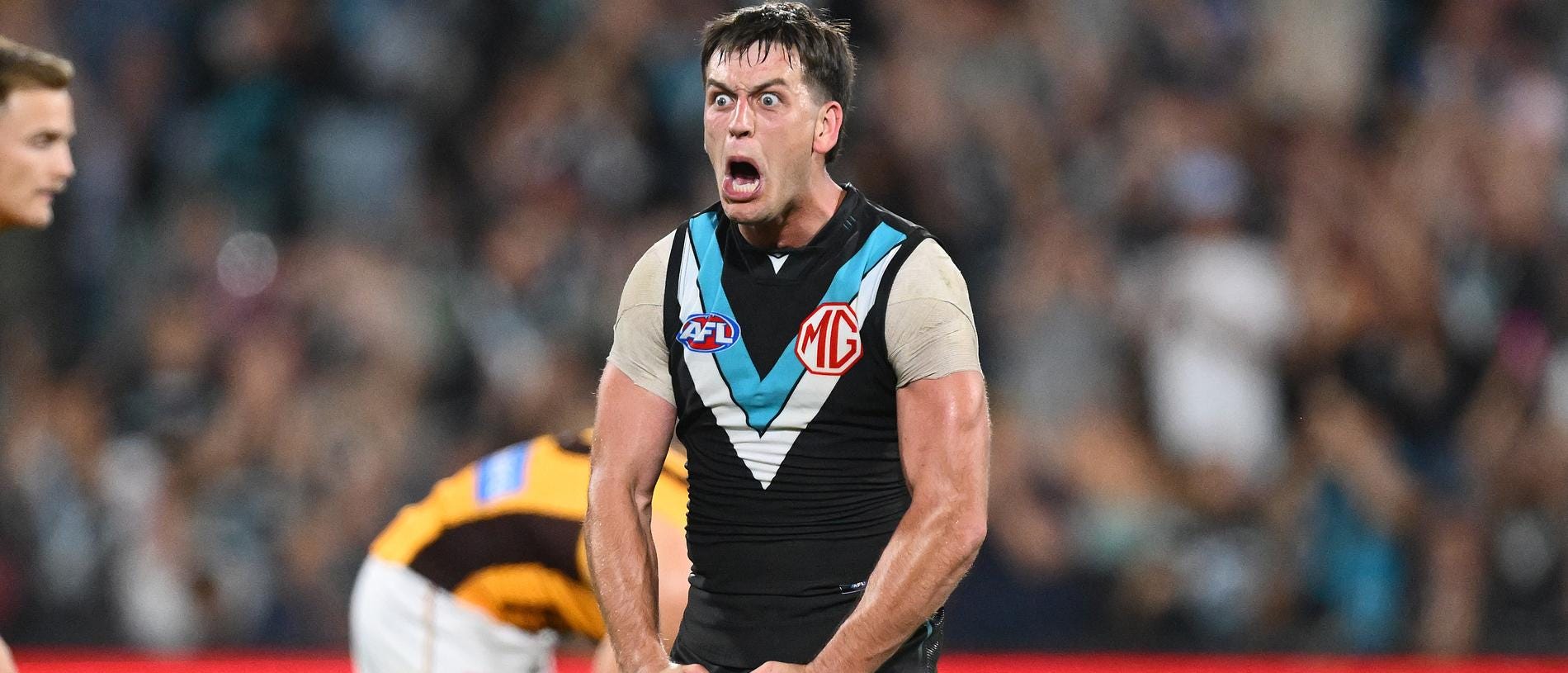
Both for what he contributes on the field and the significance of his decision about his future for the club’s medium-term, it’s Zak Butters. As I’ve written above, there are arguments to be made for both outcomes. No one at Alberton would be upset if he chose to stay. On the other hand, the selling price would provide Josh Carr and Jason Cripps with significant resources to retool a list that has become too top-heavy. Whatever happens, it’s nice we’ll get at least one more season of Butters at Port. Few players in the AFL embody their club’s self-perception the way he does – a snapping, slightly psychotic underdog who’s happy to inflict and absorb damage for his people.
Biggest question to answer
It’s very possible Butters has already made his mind up about his future. Besides, I’ve written enough about the consequences and opportunities of his decision already. I’m more interested to see Josh Carr’s game plan. Will he opt for continuity with last year’s style or take further steps in a direction of his own choosing? How fast will Port move the ball? Will they attempt to regain clearance strength or trust in their transition method? Where will players like Miles Bergman spend most of their time? There’s a long list of relevant ancillary questions.
What success looks like
Success for Port Adelaide in 2026 would require most of the following: evidence of a less fragile game plan, Jason Horne-Francis to take the leap he couldn’t last year, successfully lobbying the AFL to not curtail Port’s access to its upcoming NGA and father-son motherlode, and clarity about Zak Butters’ future intentions (Clarified Butters?). Do all that and play a final – yes, that includes the Wildcard Round – and it’ll be a good year.
In a nutshell
A new coach taking over after the club’s longest-serving incumbent, a new style, a talented but uneven list, and uncertainty about the future of its best player – there is huge variance around what happens at Alberton in 2026. Nothing from 6th to 16th would surprise. But after a decade of underwhelming certainty, most Port fans will take uncertainty with upside.