


Wow, it’s gotten so gentrified here.
2025 ladder position: 4th (16 wins, 7 losses – eliminated at Preliminary Final stage)
2025 best-and-fairest: Darcy Cameron
Senior coach: Craig McRae
Story of the season
The Pies weren’t the best team last season – but it took the best team to beat them. Collingwood’s 2025 began with a strange game in the heat against the Giants; a 52-point loss that, on the numbers, could have been a win. Craig McRae’s men were unfazed, reeling off six straight wins (including a nine-goal hammering of Brisbane at the Gabba) to jump atop the ladder, where they remained serenely perched until the final month of the regular season. Two defeats by an aggregate margin of seven points to Gold Coast and Fremantle were easy to dismiss as an aberration; the cards not falling Collingwood’s way. A 64-point loss to Hawthorn, rather less so.
Things reached an involuntary and unpleasant emotional crescendo the following week at the Adelaide Oval, where Adelaide’s Izak Rankine levelled a homophobic slur at a Collingwood player. The incident somewhat overshadowed the result – but the result mattered a lot. Collingwood’s place in the top four was suddenly in real jeopardy, and it took a narrow victory over Melbourne and a couple of results elsewhere going their way to get it back. That meant a trip back to Adelaide Oval to face the Crows in a hostile Qualifying Final. The Pies did what they usually do: triumph on hostile terrain. A gutsy and skilful four-goal win booked them a week off and a prelim against their old foe, the Lions. For a half, Collingwood were in control. But a powerful Brisbane side put their foot on the gas, and the Pies just couldn’t keep up. A five-goal loss to the eventual Premiers was a disappointment relative to Collingwood’s trajectory midway through the year, but on balance a fair reflection of their level. Close to the top of the mountain, a tier below the very best – but not falling off the cliff the way some would like to see.
Summary of game style
Under Craig McRae, Collingwood have built one of the most internally coherent systems in the AFL. They are slowest in the competition by foot, fastest by hand, and bottom-tier for disposal retention. This is all by design.
Collingwood’s possession game is built on elaborate, schematic handball chains. These are rehearsed patterns: layers of short, rondo-like exchanges that shift defensive shapes before the ball is released by foot. At times, it resembles the Flying V formation from The Mighty Ducks. When the kick finally comes, it is delivered from a position of maximum danger, and designed to damage. Much of this structure is deliberately oriented toward Nick Daicos, with chains routinely built so that he becomes the final or penultimate receiver – the player getting the ball at the moment defensive integrity has been stretched. Teammates hold width, clear corridors, and delay release to ensure he arrives at the right depth and angle. When Daicos receives in space, streaming towards forward 50, the system is functioning at full capacity. When opponents successfully deny him central access and force the ball wide, the threat level dissipates.
It’s risky, but the risk is tolerable because of the quality of Collingwood’s defensive structure. When they surge forward, second layer coverage is preserved through disciplined spacing and recovery lanes. That allows the Pies to press aggressively without being exposed. Darcy Moore is central to this balance. His licence to leave his opponent and intercept functions as a trigger for the entire back six. When Moore comes off his man to hunt for the ball, the structure reshapes around him. When he (or Jeremy Howe) is pinned deep or kept out of contests, the system loses its primary release valve.
Inside forward 50, the Pies like to search for space. Low offensive one-on-one numbers sit alongside strong marking rates because separation is created collectively. Brody Mihocek and Dan McStay took defenders away from contests and brought the ball to ground, creating space for the likes of Jamie Elliott and (when he was playing) Bobby Hill to wreak havoc. The Pies tolerate turnovers because they are structured to win the phase that follows them. Despite the neatness of their handball chains, they’re optimised to win messy games: repeat contests, forced errors, rapid counterpressing. Elite tackle differentials, intercept numbers, and opposition scoring suppression are the fuel that powers the whole machine. That system, perhaps the most distinct and well-drilled in the AFL, carries its own constraint. Opponents who can retain the ball cleanly, bypass the initial press, and deny intercept opportunities ask Collingwood to beat them through efficiency rather than chaos. That is not their preferred environment.
The Magpies aren’t always cleaner than their rivals, but are usually smarter and more organised. Slow by foot, fast by hand. Risky in the kick, ruthless in the chase, hyper-organised on both sides of the ball. They create discomfort, and thrive in it.
List changes
In:
Tyan Prindable (2025 National Draft, #32)
Sam Swadling (2025 National Draft, Pick #37)
Zac McCarthy (2025 National Draft, Pick #55)
Angus Anderson (2025 National Draft, Pick #57)
Jack Buller (trade – Sydney)
Jai Saxena (Category A Rookie)
Out:
Brody Mihocek (trade – Melbourne)
Mason Cox (delisted)
Charlie Dean (delisted)
Ash Johnson (delisted)
Fin Macrae (delisted)
Oleg Markov (delisted)
Tom Mitchell (delisted – later retired)
Will Hoskin-Elliott (retired)
List profile
Number of top-10 draft picks: four (T-13th)
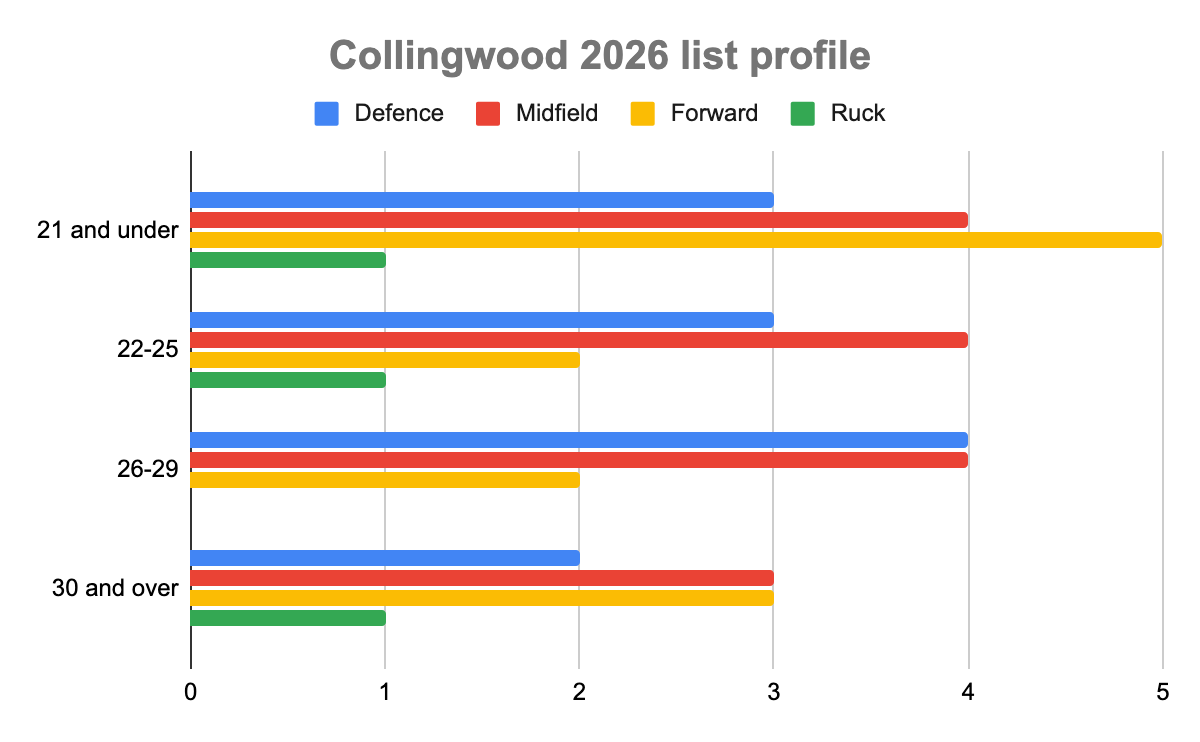
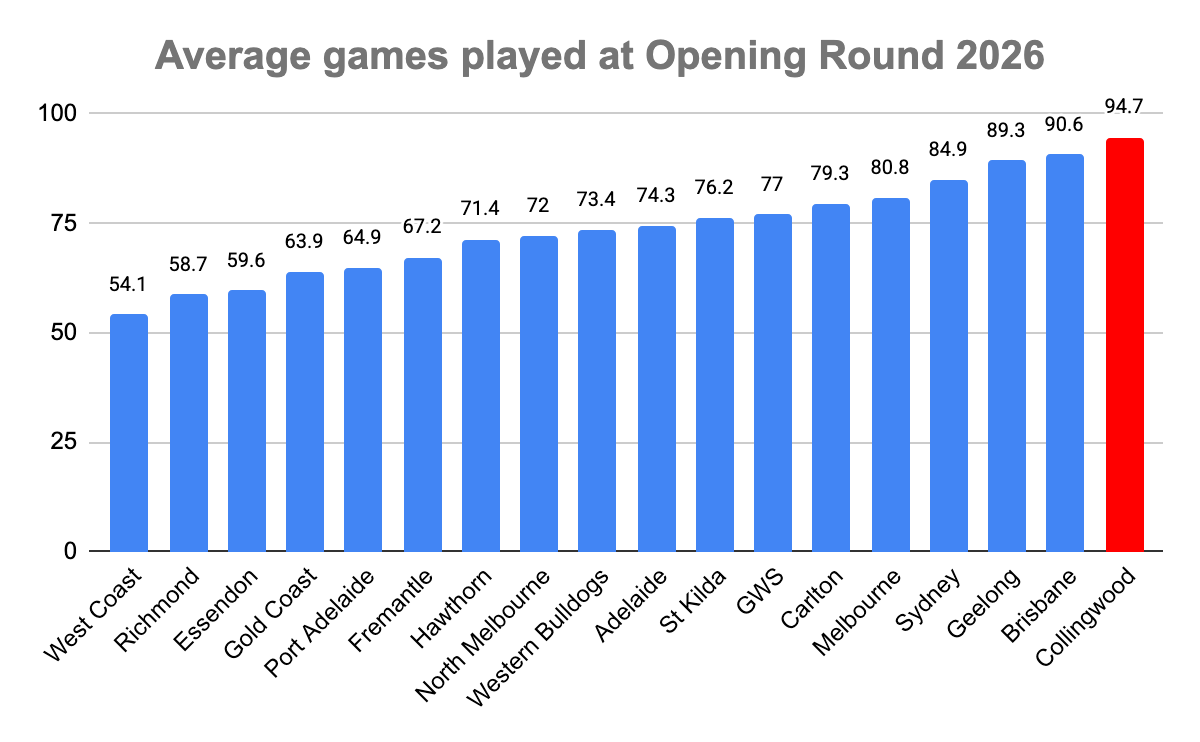
Average age at Opening Round: 25.8 (oldest)
Average number of games played: 94.7 (most)
The basic trade-off of list management in a competition constrained by a salary cap and a reverse-order draft is simple: over time, clubs are forced to choose between maximising their present and investing in their future. Most oscillate between the two. Collingwood, under its current administration, has chosen something different: permanent competitiveness.
That choice has delivered stability while also imposing limits. Rather than cycling through booms and busts, the Pies have consistently supplemented their core with mature players and late-draft prospects. They have prioritised reliability, system fit, and immediate contribution over long-horizon upside. It is a rational strategy for a big club with commercial momentum and finals expectations. It keeps the floor high but makes it hard to raise the ceiling.
The Pies don’t lack stars. What they lack is the tier beneath them: multiple high-end players aged 21 to 25 who can absorb responsibility as the older core declines (no, I’ve not forgotten about guys like Ed Allan, Ned Long, and Reef McInnes – I’m just sceptical) . Beyond Daicos, that pipeline is thin. Over time, that matters. Clubs that sustain contention over long periods tend to be ruthless about this problem. The secret ingredient of Geelong’s golden era is aggressive talent churn: identifying early which young players will not make it in their system, moving them on, and repeatedly buying lottery tickets at the margins. The Pies are beginning to do the same. This off-season reflects that shift. Prindable, Swadling, and Anderson are shells that could become pearls. Jack Buller is a functional replacement for Mihocek. McCarthy and Saxena are longer-term forward plays. None are sure things. All are attempts to find growth without sacrificing competitiveness.
Collingwood’s model produces depth, resilience, and institutional coherence but, as currently arranged, struggles to produce renewal. The Pies are well run enough to avoid collapse. But that limits their ability to replenish talent at the same pace as their rivals. Competence can win in the short run. Talent usually wins in the long run.
The backline is the nucleus of this side: it’s smart and tough. Darcy Moore is the brain – perhaps no defender in the competition makes better decisions about when to sit and when to come off his man. Jeremy Howe doesn’t have the same spring in his legs as he used to, but he’s traded leap for craft. Brayden Maynard is the brawn, Isaac Quaynor the one-on-one toughness, and Josh Daicos and Dan Houston – more on him later – the rebound. Youngsters Wil Parker and Tew Jiath will press their cases for senior selection. The lingering question that still doesn’t have a completely satisfactory answer yet is the identity of Darcy Moore’s key position partner. Backs coach Jordan Roughead worked miracles with Howe and Billy Frampton last season, and Reef McInnes has been redeployed as a defender, but still – Nathan Murphy they ain’t.
The midfield is pretty good because it’s where Nick Daicos plays. He’s full-time in there now: only Darcy Cameron saw more centre bounces last season. The obvious issue is that Scott Pendlebury and Steele Sidebottom are still getting bulk inside minutes. No one can doubt their quality and longevity. But it’s not really sustainable. The problem can partly be ameliorated by Jordan De Goey staying fit, or dialling up the midfield time of Beau McCreery and Harry Perryman (or more exotic options like Dan Houston or Josh Daicos), but if guys like Harry DeMattia and Ed Allan are to make it at the Pies, they have to stake their claim in 2026. Ned Long was a good find last season. Jack Crisp, Pat Lipinski, and Sidebottom run the wings.
All signs point to Collingwood’s forward line being familiar in structure, if not entirely familiar in personnel. Brody Mihocek departed for Melbourne, who offered him the contract security the Pies didn’t. Mihocek was never exactly a star; but he knew his role and executed it damn well. Jack Buller, traded in from Sydney, will presumably get first dibs at replicating his role in the triumvirate tall setup alongside Dan McStay and Tim Membrey (but don’t be surprised if Charlie West plays more senior footy this year). Lachie Schultz and the ageless Jamie Elliott provide defensive pressure and clinical finishing respectively. But there’s no denying there’s a Bobby Hill-shaped hole in the Collingwood forward line. You can replace him in the aggregate, but there’s no replacing that match-winning ability.
Line rankings
Defence: Above Average
Midfield: Above Average
Forward: Above Average
Ruck: Elite
The case for optimism
There’s still some juice left to squeeze. Yes, Mihocek is a loss that probably only Collingwood fans and true nerds will appreciate. But there’s talent, a history of success, and lots of corporate knowledge about how to manage the physical condition of older players. In other words, trust McRae and friends to know what they’re doing.
The most viable paths to Collingwood eking out improvement in 2026 run through Dan Houston. His first season in black and white was underwhelming by his own standards, registering his lowest player rating score since 2021. But that was more failure of fit than failure of form. At Port, Houston was the primary conduit for ball movement out of defence. No one in that system was trusted more to organise exits, select kicks, and shape attacking chains. “Quarterback” is usually a lazy import from American football, but in Houston’s case it was accurate: Port’s ball movement ran through him. That wasn’t the case at Collingwood. The Pies’ ball movement is more distributed. Josh Daicos has entrenched himself as a key link in that system, and rebound responsibilities are shared rather than centralised. Houston arrived as a high-end specialist into a side that prizes the collective.
The result was a subtle but significant weakening of his influence. He remained a good player, but wasn’t a decisive one. There is no simple solution. Two players can’t rebound the same opposition entry. But there are ways to reconfigure roles, starting positions, and rotation patterns to restore Houston’s authority without undermining the system. That is a problem McRae’s coaching staff will have spent the off-season thinking hard about. Houston is probably too good, and Collingwood paid too much to secure him, for 2025 to be as good as it gets in black and white. If the Pies can find a way to re-centre him as a genuine organising force in transition, their ceiling rises meaningfully. If they cannot, he risks remaining an expensive luxury in a side that needs him to be a difference maker.
The other cause for optimism is that we have short memories: people who don’t like Collingwood spent a lot of last season miserably convinced the Pies would jag another flag. And despite their wobble in the run home, they weren’t all that far away. I probably wouldn’t take Collingwood in a best-of-seven series against sides like Brisbane, Geelong, and the Bulldogs. But in a one-off final, where McRae and the old guys can do something crafty? Yeah. Not all footy fans are rational. But rational Pies fans must recognise that the coaching staff is doing an exceptional job getting above-market returns on a diminishing asset base.
The case for pessimism
The bearish case for Collingwood is straightforward: they are locked into the list management trajectory of a Premiership contender (with the lack of access to elite young talent that implies), but look a step behind the very best sides in the competition. The Pies are making the correct list management choices for a club in their position: shedding the old guys who weren’t adding value anymore and rolling the dice on speculative prospects. Hitting on one guy late in the draft can really move the needle on how long clubs can remain competitive. But it’s very hard to stay at the top that way, especially when your rivals, despite playing finals, have priority access to some of the best players in the draft. Of the eight Collingwood players who’ve had a player rating of 10 or higher in their last 20 games, four (Jack Crisp, Scott Pendlebury, Steele Sidebottom, and Jamie Elliott) are well into their 30s. They’re all great players, testament to professionalism and the rising tide of sports science. But you can’t deny reality indefinitely. They’re old, and Crisp aside, none will be playing AFL footy in 2028.
Collingwood’s flag window is more likely to close quietly than slam shut. It’s easy to see a scenario where they keep falling a little further behind the likes of Brisbane, Gold Coast, and the Western Bulldogs – but never quite low enough to provide them with access to the most talented kids in the country. Losing Brody Mihocek, who was such an integral part of their forward structure, and replacing him with a notionally inferior player in Jack Buller, will make the task harder. So will the ongoing absence of Bobby Hill. For as long as he’s away from the game, the Pies are less potent. Injuries are also a worry for ageing teams. The Pies had a reasonably benign run of it last year, but Darcy Moore and Jeremy Howe have already sustained soft-tissue injuries this pre-season. Lose enough of the senior core to injuries that are more likely to occur in one’s thirties – ask me how I know – and Collingwood’s goal, of competing for the flag, becomes even harder to achieve and makes the worst-case scenario (collapse in the short term) more plausible.
It’s a delicate position: stick (do everything you can to win while you have Nick Daicos) or twist (spend some time at the bottom during his peak years). Collingwood’s success at managing that trade-off since the turn of the century gives them some grace, but even the Pies aren’t meant to be good forever.
One more reason Pies fans might feel pessimistic about 2026: their “first-mover advantage in taking the piss” appears to have been eroded away. Craig McRae’s most significant innovation is that he was the first coach to clearly see that umpires would err on the side of caution late in games. McRae responded to that incentive and instructed his side accordingly: appear to try to clear the ball from stoppages while in reality making no such attempt, walk the ball over the boundary, you name it. If you’re not a Pies fan, you probably have a specific, sickening instance of this happening to you across the 2022-2024 period. That innovation removed some of the randomness from close games and replaced it with agency. But sides (and umpires) appear to have caught up. The Pies were 25-7-2 in games decided by two or fewer goals across 2022, 2023, and 2024. Last year? 3-4. Maybe it’s a coincidence. Maybe it isn’t.
Enjoying this preview and think a Pies-supporting friend might too? Share it with them!
Breakout player
I like some of the players the Pies have taken with later picks in recent drafts: Harvey Harrison, Wil Parker, Tyan Prindable. But I probably like Charlie West best. The South Australian excelled at VFL level and kicked a goal in the one game he played in 2025. He has a great leap and competes well at ground level. The prospect of edging out Jack Buller for a spot in the seniors feels more realistic than displacing Brody Mihocek.
Most important player
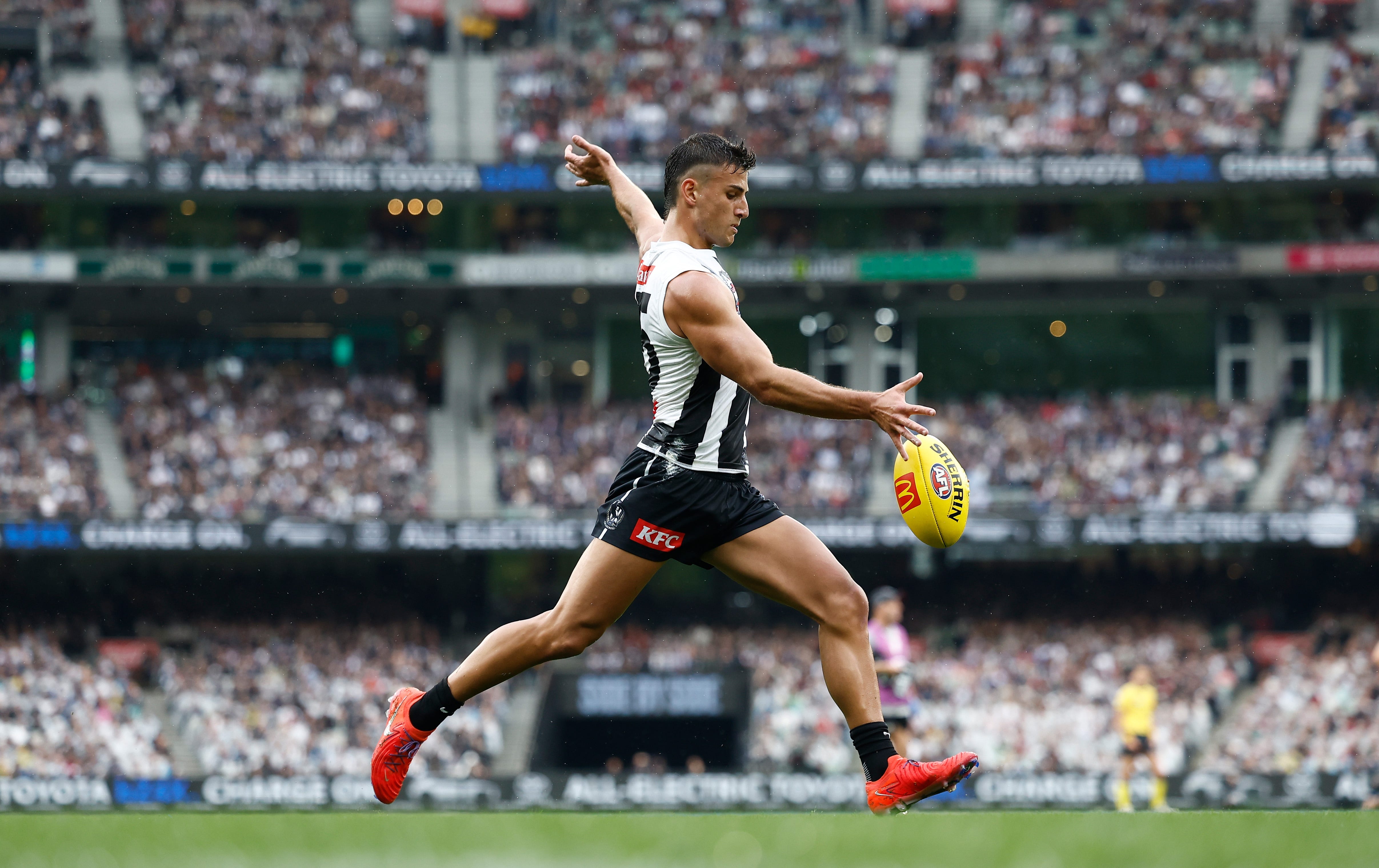
It’s still Nick Daicos, and probably will be until his star fades. In a game where each player represents less than five percent of their team, his skill and ability to produce in key moments elevates Collingwood to another level. His charisma and marketability makes him a vital trade and free agent acquisition asset.
Biggest question to answer
In this same spot last year, I asked what would Collingwood do if their all-in strategy didn’t work. In hindsight, I don’t think that was the wrong framing of the situation. Collingwood are probably too stable and too clever to fall off the cliff, especially while they can use Nick Daicos as a lead magnet. Their intention is to compete every season. I think the more likely situation is that, as the influence of the older players declines, the Pies slip a little further behind the pack year by year. So, instead, I think the question which will govern Collingwood’s medium-term future is something like: what opportunity cost are they prepared to accept to continue to chase competitiveness?
What success looks like
This year, success looks like competing. The best teams are better than Collingwood – faster, more powerful, more skilful. But the quality of Collingwood’s system, and the ability of their experienced players to act as de facto on-field coaches, can act as equalising forces. The margins at the top are thin. If Collingwood can manage ageing bodies until the big games happen, and then throw some punches, they should be satisfied.
In a nutshell
Collingwood are a little too old and not quite good enough to win the flag in 2026. There’s a gap to the very best that’s too big to bridge. But they’re smart and savvy. The ceiling is a prelim, the floor is the play-in.
Agree? Disagree? Either way, share your (polite) thoughts in the comments.
Nice